If you own office space in downtown Los Angeles right now, you’re facing one of the most challenging markets in the country. With vacancy hitting 33.3% in Q3 2025, the question isn’t whether you need to adapt—it’s how quickly you can transform your property to meet what tenants actually want in 2026. I’ve spent nearly two decades in commercial real estate, and I can tell you that the landlords who survive this market are the ones willing to invest strategically in amenities that genuinely solve tenant problems. Let’s talk about what’s actually working.
Key Takeaways
- Downtown Los Angeles faces a historic 33.3% office vacancy rate as of Q3 2025, requiring landlords to fundamentally rethink how they attract and retain tenants through strategic amenity offerings
- Modern tenants prioritize flexible workspaces, smart technology integration, wellness-focused Downtown LA office amenities, and hotel-like services over traditional office features
- Office-to-residential conversions are accelerating across DTLA, with new building codes making it easier to repurpose structures built after 1975, creating competition for remaining office landlords
Understanding the Downtown LA Office Crisis
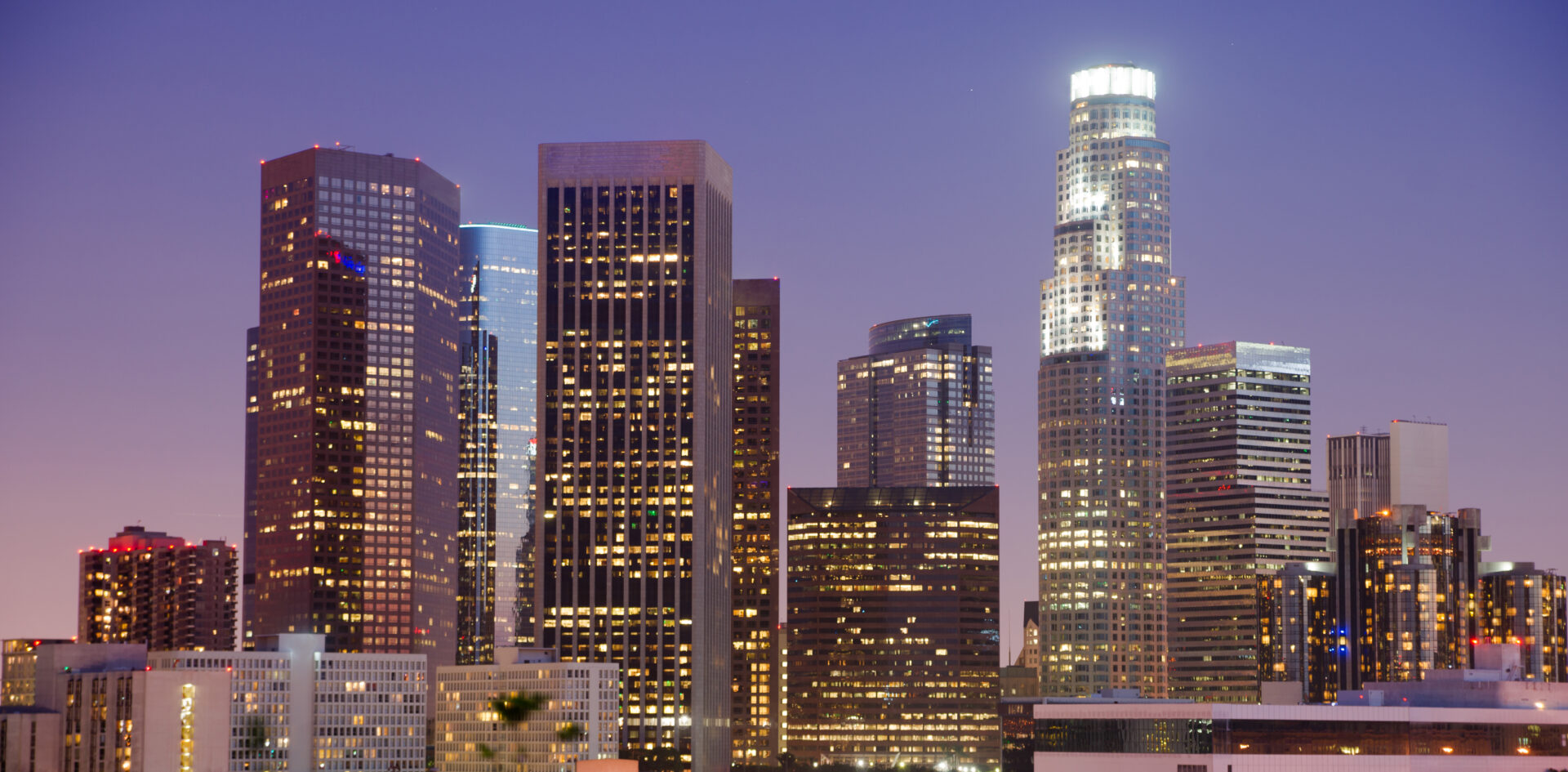
Downtown Los Angeles is experiencing an unprecedented office market crisis that demands immediate attention from property owners. The overall vacancy rate reached 33.3% by the end of Q3 2025, with availability climbing to 36.8%. To put this in perspective, downtown LA’s vacancy rate far exceeds the national average of 14% and even surpasses other struggling markets.
The financial implications are staggering. A recent study by Downtown Works warns that inaction could result in a $69.5 billion decline in assessed office property value over the next decade. This isn’t just about empty floors—it’s about the fundamental viability of downtown Los Angeles as a business center.
Why Traditional Office Space Isn’t Cutting It
The pandemic fundamentally changed how tenants evaluate office space. Companies that once prioritized square footage now focus on experience and flexibility. The Arts District has emerged as a bright spot within downtown, attracting creative tenants drawn to walkable streets and distinctive spaces. This tells us something important: location alone isn’t enough anymore.
Leasing activity did reach 3.4 million square feet in Q1 2025, slightly above the five-year average, but landlords are offering steep discounts and concessions just to stay competitive. Net absorption remains negative, meaning more tenants are leaving than arriving. The buildings that are successfully leasing space share common characteristics—they’ve invested in modernization and tenant-focused amenities.
What DTLA Tenants Actually Demand in 2026
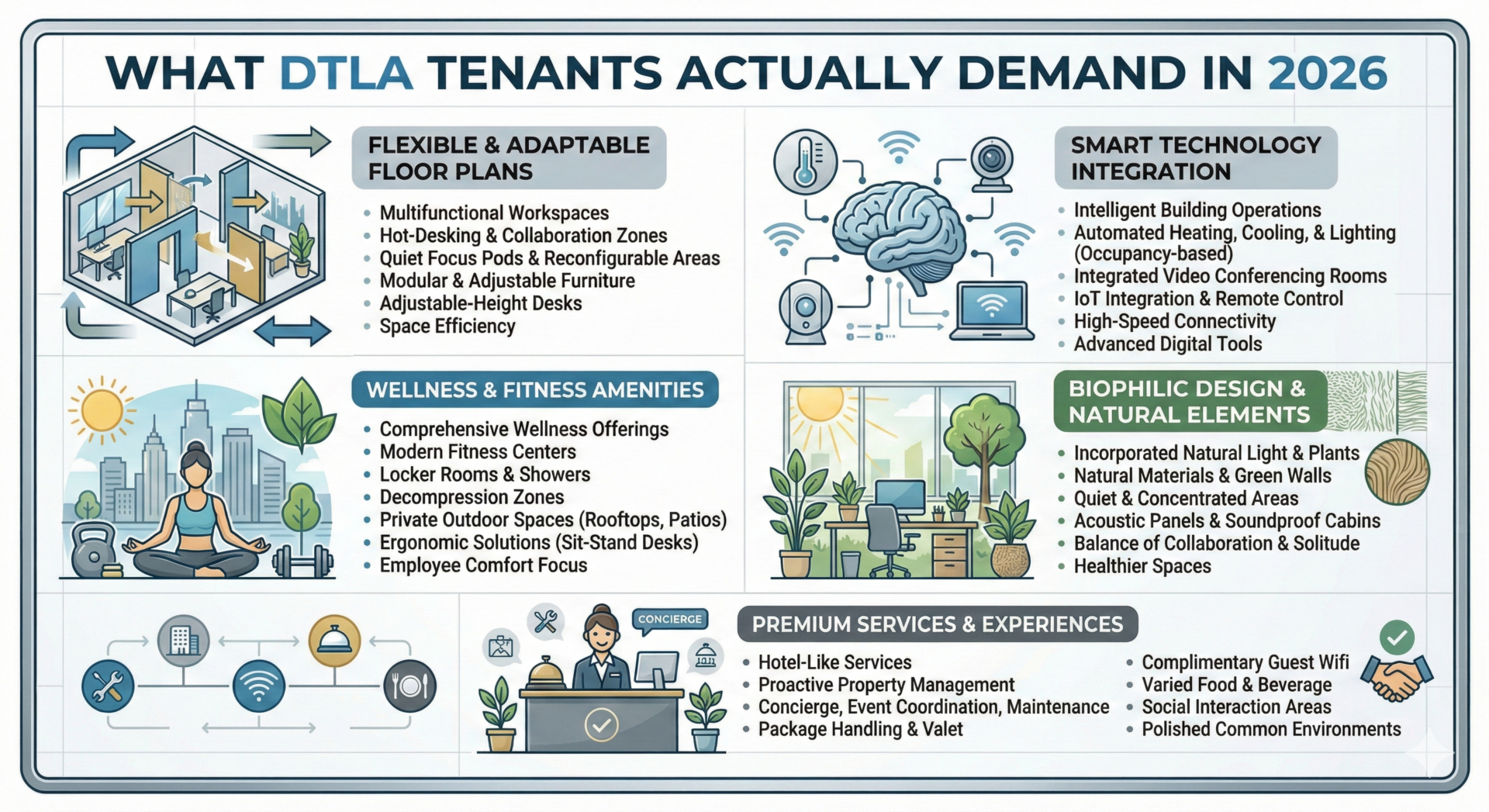
Top 5 Tenant Priorities for DTLA Office Space in 2026
| Amenity Category | What Tenants Expect | Why It Matters |
|---|---|---|
| Flexible Layouts | Hot-desking, collaboration zones, reconfigurable spaces | Supports hybrid work and team collaboration |
| Smart Technology | Automated HVAC, integrated video conferencing, IoT systems | Enables seamless remote/in-office workflows |
| Wellness Features | Fitness centers, outdoor spaces, ergonomic furniture | Improves employee health and retention |
| Biophilic Design | Natural light, plants, sustainable materials | Reduces stress and increases productivity |
| Premium Services | Concierge, package handling, event coordination | Creates hotel-like tenant experience |
Flexible and Adaptable Floor Plans
The traditional model of fixed desks for every employee has become obsolete. Tenants in 2026 expect flexible, multifunctional workspaces that support hybrid work models and collaboration. This means incorporating hot-desking areas, collaboration zones, quiet focus pods, and spaces that can be reconfigured based on project needs.
I’ve seen this transformation firsthand—companies are downsizing their overall footprint but demanding higher-quality, more versatile space. Modular furniture that allows teams to adjust their workspace, adjustable-height desks supporting both sitting and standing, and multipurpose furniture that maximizes space efficiency are no longer nice-to-haves. They’re baseline expectations.
Smart Technology Integration
Modern tenants expect buildings to operate intelligently. Smart technology has become a key differentiator in office design, including automated systems for heating, cooling, and lighting that adjust based on occupancy. Conference rooms need integrated video conferencing capabilities, and building-wide connectivity must support today’s digital workflows.
IoT integration helps presidential meeting rooms happen remotely while being controlled simultaneously, and state-of-the-art development tools help teams communicate efficiently in both remote and in-office environments. High-speed internet and advanced communication tools are non-negotiable infrastructure requirements.
Wellness and Fitness Amenities
Wellness-focused amenities play a major role in tenant satisfaction and retention. This goes beyond just having a fitness center—though that’s certainly important. Tenants are looking for comprehensive wellness offerings including fitness spaces with modern equipment, locker rooms with showers, and wellness areas designed for decompression.
Access to private outdoor spaces has become increasingly valuable. Rooftops, landscaped patios, and outdoor work areas provide employees with much-needed breaks from indoor environments. DTLA properties with rooftop access offering 360-degree views of the downtown skyline have a distinct competitive advantage.
Ergonomic furniture and wellness-focused solutions are essential for modern offices. Sit-stand desks, adjustable chairs, and dedicated wellness zones reduce fatigue, prevent discomfort, and enhance overall health. These elements reflect a commitment to creating workspaces that value employee comfort and long-term wellbeing.
Biophilic Design and Natural Elements
Biophilic design has evolved from trend to baseline expectation. This means incorporating natural light, plants, and natural materials to create healthier spaces. Natural light, thoughtful design, and employee-focused amenities significantly impact tenant satisfaction.
Modern offices integrate quiet and concentrated work areas with acoustic panels, adjustable lighting, and soundproof cabins. These spaces enable a balance of collaboration and solitude, allowing workers to manage both creative thinking and task-oriented work conveniently.
Premium Services and Experiences
Today’s tenants expect hotel-like services from their office buildings. Proactive property management that offers concierge services, event coordination, responsive maintenance, and a high-touch tenant experience sets properties apart. This includes package handling, valet parking depending on tenant needs, and complimentary guest wifi.
Areas for social interaction, varied food and beverage options, and spaces designed for human-centered needs support different work styles and abilities. Professional landscaping, upgraded signage, and well-maintained common areas create the polished environment that premier tenants expect.
The Conversion Competition
DTLA landlords face an additional challenge: office-to-residential conversions are accelerating across downtown. In 2025, office-to-residential projects reached an all-time high with 77,700 offices expected to be converted nationwide. Downtown Los Angeles has made this easier by expanding the Adaptive Reuse Ordinance to include buildings constructed as recently as 15 years ago.
The new ordinance removes minimum unit size requirements and allows buildings with modern systems to receive expedited local approval by avoiding CEQA review. Residential conversions don’t just reduce available office inventory—they fundamentally change the character of downtown, potentially creating more vibrancy but also more competition for remaining office properties.
In the last decade, 22% of new housing in Los Angeles has been built downtown, where city planning policies encourage dense development. Union Bank Plaza and other towers from the 1960s through 1980s are attractive conversion candidates because their outer skins can be modified to include balconies and operable windows.
Strategic Positioning for 2028 Olympics
The 2028 Olympics present both opportunity and deadline for DTLA office owners. Real estate experts predict increased interest as early as 2026, with neighborhoods near Olympic venues becoming hot spots. The influx of visitors and increased attention on Los Angeles could lead to rises in property values and surges in rental demand.
Los Angeles will leverage its existing venues and infrastructure, from Dodger Stadium to SoFi Stadium, creating opportunities for nearby office properties. However, this also means the window for repositioning properties is narrowing. Buildings that haven’t invested in modern amenities by 2027 will likely struggle to capitalize on Olympic-related demand.
The city is taking advantage of its glut of already-existing hotels and venues, and office buildings should think similarly about leveraging what makes DTLA unique—proximity to transit, the Financial District, and emerging neighborhoods like the Arts District.
Financial Realities and Investment Priorities
With average asking rents at $38 per square foot in downtown—below the greater Los Angeles market average of $42—rent alone won’t justify major capital investments. However, the cost of doing nothing is significantly higher. Buildings that can’t attract or retain tenants face declining valuations, potential loan defaults, and ultimately obsolescence.
Office property transactions in downtown have increased 114% year-over-year, suggesting investors are identifying opportunities in distressed assets. The buildings attracting buyer interest typically have either good bones for conversion or are already positioned with modern amenities.
Top-tier buildings in submarkets like Century City maintain 13% vacancy and command nearly $7 per square foot monthly because they offer what tenants want. The gap between these properties and struggling downtown buildings isn’t location alone—it’s the tenant experience.
The DTLA Office Divide: What the Numbers Tell Us
- Downtown LA Average: $38/sq ft asking rent | 33.3% vacancy
- Greater LA Market: $42/sq ft asking rent | Lower average vacancy
- Premium Submarkets (Century City): ~$84/year ($7/month) | 13% vacancy
- Downtown Transactions: Up 114% year-over-year
- Projected Value Loss (if no action): $69.5 billion over next decade
Implementing Amenity Upgrades Strategically
Not every building needs every amenity, but every building needs a coherent strategy. Start by understanding your target tenant profile. Creative companies in the Arts District prioritize different amenities than financial services firms near Pershing Square.
Focus first on infrastructure that enables modern work: reliable high-speed connectivity, HVAC systems that can handle flexible occupancy, and security systems that balance access control with tenant convenience. These invisible amenities form the foundation for everything else.
Next, address spaces tenants see daily: lobbies, common areas, restrooms, and corridors. Prestigious reception areas and informal meeting spaces between tenants create the professional environment that attracts quality companies. This doesn’t require complete reconstruction—thoughtful design updates with natural materials, improved lighting, and comfortable seating make significant impacts.
Consider partnerships for amenities that require specialized operation. On-site dining, fitness centers, and childcare facilities work best when operated by experienced vendors who can provide consistent service. This approach reduces your operational burden while still offering tenants the services they value.
Your Amenity Investment Roadmap
Phase 1: Foundation (Must-Have Infrastructure)
- High-speed fiber internet and 5G connectivity
- Modern HVAC with flexible zone control
- Upgraded security and access systems
- Reliable building-wide WiFi
Phase 2: Daily Experience (High-Impact Upgrades)
- Renovated lobby and common areas
- Updated restrooms and corridors
- Comfortable seating and collaboration spaces
- Improved lighting (natural and LED)
Phase 3: Competitive Differentiators (Tenant Attraction)
- Fitness center or wellness room
- Rooftop or outdoor workspace
- On-site food and beverage options
- Concierge and premium services
The Path Forward for DTLA Office Owners

The downtown Los Angeles office market won’t recover to pre-pandemic occupancy levels—at least not soon. The number of workers visiting downtown hit a post-pandemic high in Q4 2024, but this represents progress from an extremely low baseline, not a return to normal. Office vacancy increased from 20% to 21% year-over-year even as foot traffic improved.
This reality requires a fundamental mindset shift. Your building isn’t competing primarily with other office buildings anymore—it’s competing with remote work, with suburban flex space, with converted lofts in the Arts District. You need to offer something those alternatives can’t.
Buildings that successfully navigate this market share several characteristics: flexible spaces that support hybrid work, technology infrastructure that enables seamless collaboration, wellness amenities that give employees reasons to come to the office, and management that treats tenants as customers rather than just lease agreements.
The DTLA Alliance business improvement district oversees 65 blocks of downtown and has seen promising signs in residential, hospitality, and retail sectors even as office struggles. This suggests downtown isn’t dying—it’s transforming. Office properties that align with this transformation will find their place in the new ecosystem.
FAQs
What is the current office vacancy rate in downtown Los Angeles?
The downtown Los Angeles office vacancy rate reached 33.3% at the end of Q3 2025, with overall availability at 36.8%. This represents one of the highest vacancy rates in the country and significantly exceeds the national average of 14%.
What amenities do office tenants prioritize most in 2026?
Tenants prioritize flexible and adaptable floor plans supporting hybrid work, smart technology integration including automated building systems, wellness and fitness amenities with modern equipment, biophilic design incorporating natural light and plants, and hotel-like services including concierge support.
How are office-to-residential conversions affecting the DTLA market?
Office-to-residential conversions accelerated in 2025 with 77,700 offices expected to be converted nationwide. Los Angeles expanded its Adaptive Reuse Ordinance to include buildings constructed as recently as 15 years ago, removing minimum unit size requirements and expediting approvals. This creates additional competition for remaining office properties.
Will the 2028 Olympics help the downtown LA office market?
The 2028 Olympics are expected to increase real estate demand starting as early as 2026, particularly for properties near Olympic venues. However, this opportunity primarily benefits buildings that have already invested in modern amenities and positioned themselves to attract quality tenants before the Olympic influx.
What is the average asking rent for DTLA office space?
Average asking rent in downtown Los Angeles is approximately $38 per square foot, which is below the greater Los Angeles market office rent average of $42 per square foot. Landlords are offering steep discounts and concessions to remain competitive in the current market.
Conclusion
The 33.3% vacancy rate isn’t just a statistic—it’s a call to action for every office owner in downtown Los Angeles. The amenities tenants demand in 2026 aren’t luxuries; they’re survival necessities in a market that’s permanently changed. I’ve worked through enough market cycles to know that waiting for conditions to improve rarely works out well.
If you’re ready to discuss how to strategically position your DTLA property for today’s market realities, let’s talk. Schedule a consultation with Tolj Commercial and we’ll walk through your specific building and create a plan that actually makes sense for your situation. The landlords who thrive in this market are the ones who act decisively—not the ones who hope things return to 2019.