If you’re planning to open a pet grooming business or veterinary clinic in Eagle Rock, signing the right lease is one of the most important decisions you’ll make. Most standard commercial leases simply aren’t built with pet groomers in mind. You need specific plumbing, proper ventilation, the right zoning, and lease language that actually protects your investment. This guide breaks down everything your pet grooming lease in Eagle Rock must include so you can move forward with confidence.
Key Takeaways:
- Pet grooming and veterinary clinics have unique infrastructure needs that most standard commercial leases do not account for, making it critical to negotiate specific provisions before you sign.
- Lease terms like permitted use clauses, tenant improvement allowances, and zoning compliance directly affect how smoothly your pet care business can operate in Eagle Rock.
- Partnering with a commercial real estate expert who understands the grooming and veterinary industry puts you in a much stronger position when negotiating with landlords.
Why Eagle Rock Works for Pet Groomers and Vet Clinics

Eagle Rock has become one of the more appealing neighborhoods in the Los Angeles area for independent business owners, and pet care professionals are no exception. The community is known for its strong local character, a growing residential base, and a very visible love for pets. Dog owners here tend to seek out professional, neighborhood-based services over large chain operations, which makes this a genuine opportunity for independent pet groomers and veterinary practices looking to build a loyal client base.
The commercial corridors in Eagle Rock, particularly along Colorado Boulevard, offer a mix of retail, service, and medical spaces that can work well for grooming businesses and clinics. Foot traffic is consistent, and the community tends to support local businesses that deliver quality service and build real relationships with the people who live there.
That said, finding the right location is only half the battle. The real challenge is making sure your lease actually supports the kind of work you’re doing. Pet grooming and veterinary care come with specific operational requirements that go well beyond what a typical retail tenant needs, and your lease has to reflect that reality from day one.
Essential Lease Terms for Your Pet Grooming Business
Before you put pen to paper on any commercial lease in Eagle Rock, there are several key terms you need to have locked down. Skipping these can lead to serious headaches, including unexpected build-out costs, restrictions on your services, or lease violations that could jeopardize everything you’ve built.
The Permitted Use Clause Matters More Than You Think
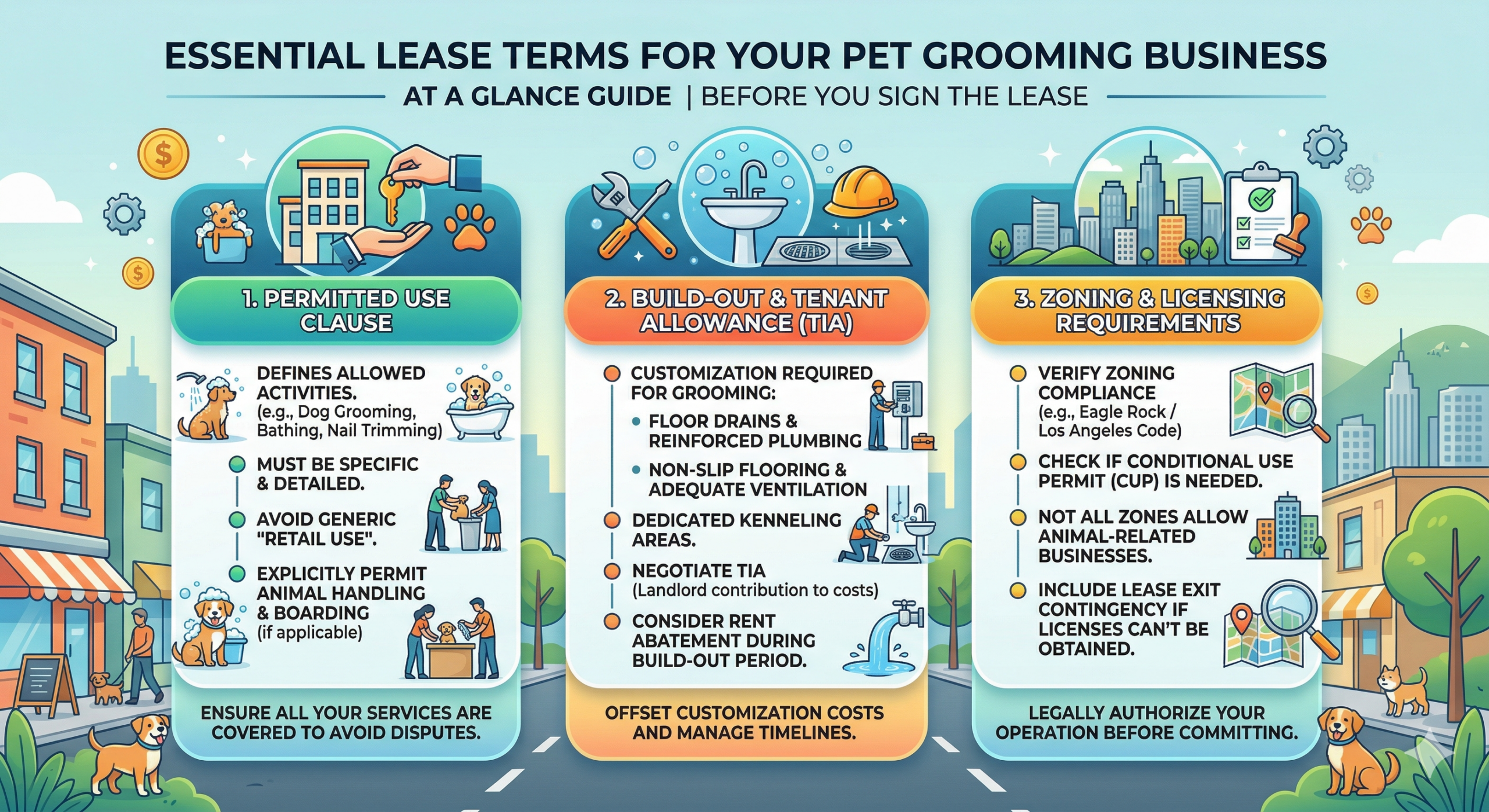
The permitted use clause defines exactly what type of business you’re allowed to operate in the space. For pet groomers and veterinary clinics, this clause needs to be detailed and specific. A generic “retail use” or “personal services” designation may not cover animal handling, medical procedures, boarding, or the use of professional grooming equipment.
If your lease doesn’t explicitly permit dog grooming, bathing, and the keeping of animals on the premises, you could run into problems with your landlord even if local zoning allows it. Make sure the permitted use section names your specific services, including grooming, bathing, nail trimming, and any veterinary services you plan to offer. The more specific the language, the better protected you are as a business owner.
Build-Out and Tenant Improvement Allowances
Most commercial spaces are not set up for pet grooming right out of the box. You’ll likely need floor drains, reinforced plumbing to handle high water usage, non-slip flooring, adequate ventilation to manage odors and airborne allergens, and dedicated areas for kenneling if boarding is part of your service offering.
Negotiating a tenant improvement allowance (TIA) is one of the best ways to offset these build-out costs. A TIA is a contribution from the landlord toward the cost of customizing the space to fit your specific needs. The amount you can negotiate depends on the length of your lease term, your creditworthiness, and current market conditions in Eagle Rock.
Even if the landlord won’t offer a large TIA, you can sometimes negotiate rent abatement during the build-out period, giving your pet grooming business time to get fully operational before you’re on the hook for full rent payments.
Zoning and Licensing Requirements
Eagle Rock falls under the City of Los Angeles’s jurisdiction, which means zoning regulations fall under the LA municipal code. Not all commercial zones allow animal-related businesses by right, and this is something that catches a lot of new business owners off guard.
Before signing, work with your commercial real estate broker to verify zoning compliance and check whether a conditional use permit (CUP) is required. If a CUP is needed, the process takes both time and money, so factor that into your timeline before committing to any lease.
Your lease should also include contingency language that gives you the right to exit the agreement if you’re ultimately unable to obtain the permits or licenses needed to operate. This kind of protection is standard in well-negotiated commercial leases and is something a good broker will push for on your behalf.
Understanding Rent Structure for Pet Care Businesses
Commercial leases in Eagle Rock typically come in a few different structures, and knowing the difference matters for your bottom line as a pet care business owner.
A gross lease means you pay a flat monthly rent and the landlord covers most operating expenses. A net lease, often referred to as a triple net or NNN lease, means you pay base rent plus a share of property taxes, insurance, and maintenance costs. For grooming businesses, NNN leases can be tricky because operating costs can add up quickly, especially in a busy commercial area.
Modified gross leases are often a middle ground and can work well for grooming businesses and veterinary clinics. They typically offer more predictability in your monthly costs while still giving the landlord some flexibility on expense sharing.
When evaluating any rent structure, consider the full cost of occupancy rather than just the base rent. Factor in common area maintenance (CAM) charges, utility costs (which tend to run higher for pet grooming due to significant water usage), and any annual rent escalation clauses written into the agreement. A modest annual increase sounds small on paper but adds up considerably over a five or ten-year lease term.
Health, Safety, and Environmental Provisions in Your Lease
Pet grooming and veterinary environments come with a unique set of health and safety considerations that need to be addressed directly in your lease agreement. These are not areas to skim over.
- Plumbing and drainage. High water usage is a standard part of any dog grooming operation. Your lease needs to allow for modifications to the plumbing system, including the installation of floor drains and heavy-duty utility sinks. Make sure you have written permission from the landlord to make these modifications, and clarify who is responsible for maintaining them over the lease term.
- Ventilation and air quality. Proper ventilation is not just a comfort issue for professional pet groomers. It is a genuine health and safety requirement. Animal dander, grooming chemicals, and odors need to be managed with adequate HVAC capacity. Your lease should specify who is responsible for HVAC maintenance and upgrades and whether you have the right to modify the existing system if it doesn’t meet your operational needs.
- Waste disposal. Veterinary clinics and grooming businesses generate waste that requires specific disposal protocols, including animal waste, grooming byproducts, and in the case of veterinary practices, regulated medical waste. Your lease should address waste disposal responsibilities clearly and make sure you’re not held in violation simply for carrying out normal business operations.
- Noise and nuisance clauses. Some commercial leases include broad nuisance provisions that restrict noise and odors. For a pet grooming business, this can create real exposure. Make sure any such clauses include reasonable carve-outs for normal pet grooming and veterinary activity, with “normal business operations” defined clearly in writing.
Negotiating Your Lease as a Pet Business Owner
Walking into a lease negotiation without a clear understanding of what you need is one of the most costly mistakes a new business owner can make. As a professional pet groomer or veterinary clinic owner, your needs are more specialized than most, and that means you need to come to the table better prepared.
Start with your numbers. Know what rent your business can realistically support based on projected revenue, and factor in all your occupancy costs before agreeing to anything. Pet care businesses can be highly profitable when set up correctly, but early-stage margins make it critical to negotiate favorable lease terms from the start.
Work with a commercial real estate broker who has hands-on experience representing business owners in the pet grooming and veterinary space. A knowledgeable broker understands what landlords are willing to flex on, what’s typically non-negotiable, and how to structure a deal that protects your interests over the full lease term. In a competitive market like Eagle Rock, having that expertise working in your corner makes a meaningful difference.
Don’t skip the lease review process either. Have a real estate attorney review any agreement before you sign. Lease documents are long, complex, and full of details that matter. A missed clause or overlooked provision can cost you far more than the price of a legal review.
Finally, think long-term. A five or ten-year lease is a significant commitment. Consider renewal options, relocation clauses, and what happens if you need to expand your grooming or veterinary services down the line. Building flexibility into your lease from the start gives your business room to grow without forcing you into a difficult renegotiation at the worst possible time.

FAQs
What should a pet grooming lease in Eagle Rock specifically include?
Your lease should include a clearly defined permitted use clause that covers all your grooming services, provisions for plumbing and drainage modifications, ventilation requirements, waste disposal responsibilities, tenant improvement allowances, and contingency language for zoning and licensing. These elements are specific to pet care operations and are frequently missing from standard commercial leases.
Do I need special zoning to operate a pet grooming business in Eagle Rock?
Eagle Rock is part of the City of Los Angeles, so zoning regulations fall under LA’s municipal code. Not all commercial zones allow animal-related businesses by right. Before signing any lease, confirm that the space is appropriately zoned for your intended use and check whether a conditional use permit is required.
How do I negotiate a tenant improvement allowance for a grooming space?
TIA negotiations depend on your proposed lease term length, current market conditions in Eagle Rock, and the landlord’s motivation to fill the space. Longer lease commitments typically result in more generous allowances. Working with a commercial real estate broker who understands the current market gives you the best shot at securing a favorable deal.
What type of commercial lease is best for a pet grooming or veterinary clinic?
It depends on your specific situation, but many pet care business owners find modified gross leases offer the best balance of cost predictability and flexibility. NNN leases can work in the right circumstances, but you need to carefully evaluate projected operating costs, since grooming operations typically use significantly more water than standard commercial tenants.
Why should I use a commercial real estate broker for my pet grooming lease?
A broker with experience representing business owners can identify spaces that meet your operational requirements, negotiate lease terms on your behalf, and flag provisions that could hurt your business later. For a specialized operation like a pet grooming business or veterinary clinic, that expertise routinely saves clients significant time, money, and stress throughout the entire process.
Conclusion
Getting your lease right from the start is what sets a pet grooming business up for long-term success in Eagle Rock. The details in your lease agreement, from permitted use language to plumbing provisions, directly shape how smoothly your operation runs from the moment you open your doors. Taking the time to get those terms right before you sign is always worth it.
If you’re ready to start your search or need help reviewing a lease before you commit, reach out to Tolj Commercial and let’s set up a consultation. With over 18 years of commercial real estate experience representing business owners, I’m here to make sure this process works in your favor.